Tuesday, May 15, 2012

Violence and Protection for Vulnerable Populations

Just last night while skimming through the newspaper, two major headlines screamed out to me:
  • "One young person dies every day in Guatemala because of violence.  From January to April of this year, 125 youth, the majority between the ages of 15-17, have been assassinated."
  • "At least 49 mutilated cadavers have been found  along a highway in northern Mexico, believed to be Central American migrants, victims of the drug cartel the Zetas."
taken from Prensa Libre; articles in Spanish here and here

This is the reality of violence here and in many parts of the world.  Violence; that word we hear and use so often without even really being able to humanize it.  Stark statements like these help us to start feeling more what this reality of violence means, but even more so, personal connections that many of you have had here with these same youth and these same Central American migrants.  Surely you have not forgotten your experiences in San Marcos working and sharing with a community where 70-80% of the male population has spent time migrating and working in either Mexico or the U.S.  Or your experiences of meeting the youth of La Linea in San Martin and the fact that they are forced in many ways to chose between participating in the local church or the gangs that thrive in their community, knowing that choosing the gang will lead them to either death or incarceration.  Because of these experiences and our new knowledge of these realities that people we have met and interacted with face EVERY DAY, I am convinced that issues like violence and the root causes of them are now our issues (and have been for a long time even if we were unaware of it before).  These types of revelations bring into the spotlight the great importance of educating ourselves more about these root causes and finding ways to combat them.  After last night's reading of the newspaper, it was more than appropriate that I would, today, find out about an International Arms Trade Treaty that is to be discussed at a UN conference that begins in 48 days; a treaty that is key to helping address this issue of violence that we are all connected to.  You can read more about this and MCC's support of the treaty at the Latin American Advocacy blog.  There you will also find out about an organization called "Control Arms" that is advocating for an "international legally-binding agreement that will stop transfers of arms and ammunitions that fuel conflict." Realizing that people (myself included) leave their experiences here feeling overwhelmed and useless in the face of so many complicated things, this is an exciting and active way that we can all really DO something that may help.  I firmly believe that once you are personally connected to an issue, like you are now connected to the families in San Marcos and the youth in La Linea, you are left with a responsibility to act; this is an opportunity to do just that.

   
Photo by Melissa Engle for MCC's  A Common Place; read about Gustavo's immigration story here

 Youth from the Iglesia Bautista Discipulos de Cristo in San Martin; click here to read and see more pictures on their blog

Wednesday, May 9, 2012

In the spotlight: San Marcos

As some of you may know, the programs in San Marcos were recently featured in MCC's magazine A Common Place.  This was an exciting opportunity to highlight the positive things that are happening there; things many of you have played a role in shaping in either big or small ways.*  We encourage you to take the time to read the stories and reconnect to this part of the world as expressed in A Common Place Spring edition!

The issue of gold mining is something that is easily associated with San Marcos, and again, something that many of you have been able to learn about first hand during your visits here.  News reports of the conflict that exists around these types of mega-projects abound in both Guatemala and other parts of the world (see here and here).  I was recently given a book entitled "Damned Nations" which I would highly recommend reading if you are interested in digging even deeper into these issues; see here for an analysis of this book by Canadian author Samantha Nutt.

It is our hope that as participants in Connecting Peoples service learning experiences, you continue to stay connected to your experience here once you return home.  It is always encouraging to read reflections like this one from Enlace 2011 participant, Emma Nussli, which serves as a reminder of  the long-term impact of these types of experiences.  One of the CP program goals for this year is to put together an advocacy tool-kit that will provide you with concrete information and tips on how to advocate around the complicated issues you were exposed to while here; please stay tuned for more on that in the coming months.  Also, in our desire to support friends' projects, another way you could stay connected to Guatemala and San Marcos is to consider returning for a longer visit and possibly studying Spanish at El Migrante Spanish School, a new language school right in the heart of San Marcos.  And, for one final reflection on San Marcos and the work of MCCer Nate Howard, watch "Guatemala:  Assisting farmers, empowering communities".

MCC photo Melissa Engle
http://acommonplace.mcc.org/acp/2012/04_06/cover_story.html

*The recent University of Saskatchewan group was the very first group to spend a night in the tourist cabaña in La Vega del Volcan, something many of you have supported the construction of.  Pictures coming soon of this exciting moment in the La Vega co-op's history!  Likewise, the local tourism management board in Sibinal, San Marcos has started a campaign to attract more tourist to the area, promoting visits to La Vega and the projects there.  Their website is under construction but is yet another sign of the positive development happening in the area.  

many thoughts

As you have probably realized, our "monthly" updates don't happen as monthly as we would hope, but we assure you we have good excuses for these delays!  Since March, we have been busy hosting groups from Rockway, the University of Saskatchewan, and Rosthern Junior College.  There are many thoughts, experiences, and reflections to share, but for now, a few images from Rockway's visit with more details to come VERY SOON!

 Rockway was the first group to start working on ANADESA's new land, where one day their community and education center will be built!  (Thank you to U of S and RJC for also helping clear coffee trees, rocks, and many, many bags of trash from the property!)


 Rockway also connected with a variety of youth initiatives in Cotzal near Nebaj, Quiche, one of which is working at starting a small chicken farm.  Looks like the chickens were happy with their new home and have already started using it!


Thank you to Lindsay, Toby, and Yasmin for sharing these pictures

Wednesday, February 29, 2012

A different view


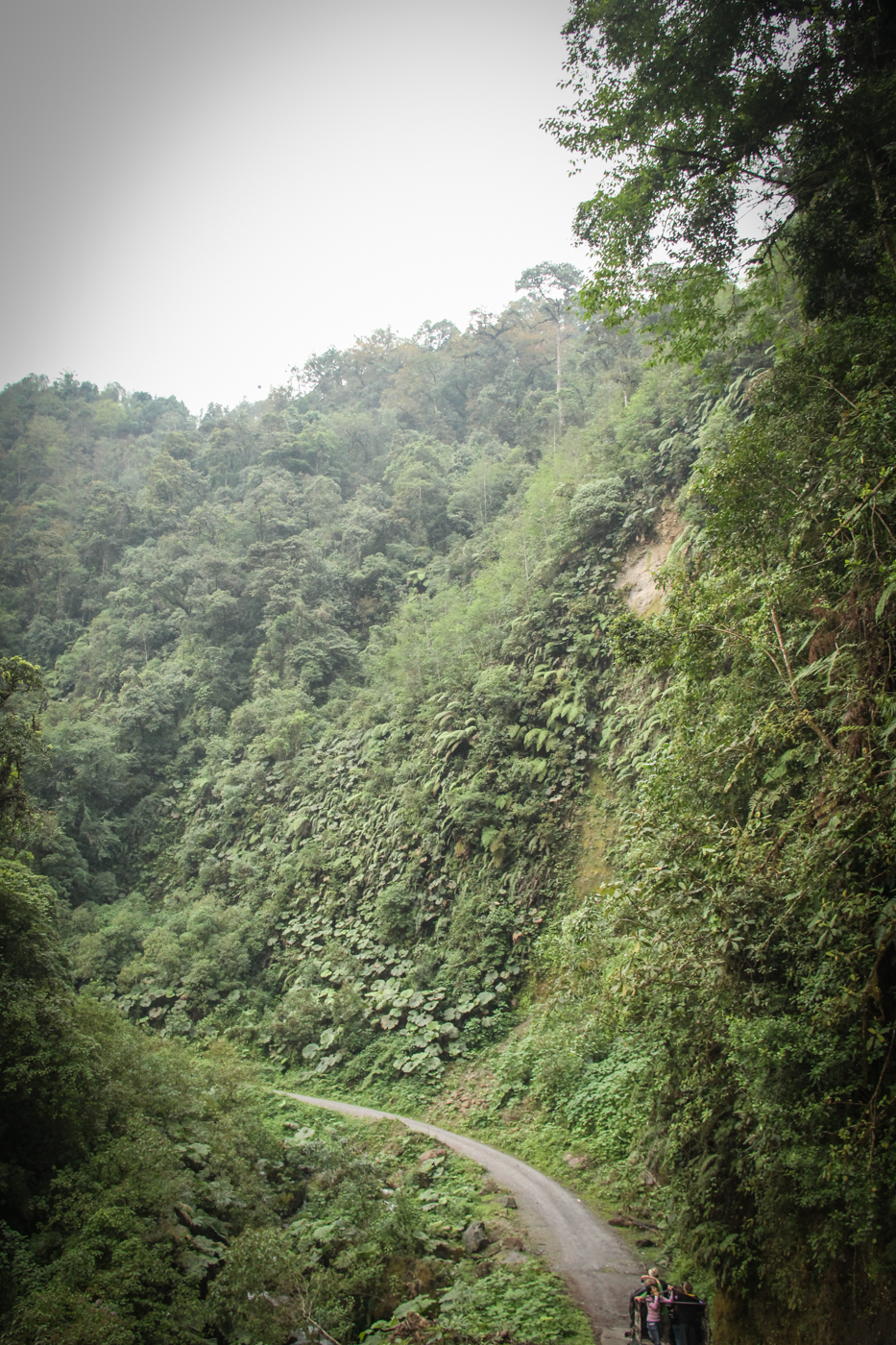
Just in case you need a reminder of what Guatemala looks like, or a little sneak preview of what you'll see when you visit us, enjoy these shots taken in the areas of Nebaj and San Marcos.

thank you to Bernie Burnett and the Rockway 2011 group for the pictures!!
NEBAJ


SAN MARCOS


Tuesday, February 28, 2012

A glimpse

In last month's post, we shared about the culture of violence that is present in many countries in the region. Although this can be a difficult topic to focus on, often leaving one feeling discouraged, there are small things happening that cast a more positive light on the situation. One of those things is the work that SALTer, Maria Steinman, is involved in at ANADES, an MCC partner in El Salvador. Maria works at Centro Hogar, a preschool/daycare program ran by ANADES that serves low-income families from some of the more marginalized areas of San Salvador, areas that know very well what this culture of violence feels like. Maria gives us a glimpse into this reality in this reflection:

"In my blog post in January, I talked about all the sadness and pain I have seen and experienced here in Central America. Some days can be more overwhelming than others. But I was very glad when the kids came back to school because they are something that gives me joy every day. Even though these little kids have been born into a context of severe poverty and violence, when I see them running and playing and laughing and smiling with their friends or another one of the teachers, it gives me hope. The cards (and statistics) are stacked up against them, but when I see their beautiful smiles and the spark in their eyes, I see hope: they are still innocent, loving babies, and it could be their generation that changes the culture of violence and machismo, that has plagued El Salvador for far too long. Or at least I choose to hope and believe this, because if I didn't, there would be no point of me being here, volunteering with MCC and ANADES, 2 NGO's (non-governmental organizations) that are working for peace and justice and a better future here in El Salvador. By coming to the day care/pre-school, and receiving nutritious breakfast and lunches daily, as well as lots of love and affection and a good education, the children are getting a better start to their life. I am constantly so impressed by the work my co-workers do, despite the limited staff and resources we have here. We just have to hope that although we can't be with these kids as they grow up into teenagers and then adults, that we are doing the best that we can with them now. And the parents as well, although some of them associated with the gangs, are also doing the best they can for their kids, despite the very difficult context they grew up in, and continue to live in." To learn more and see pictures of Maria's experience in El Salvador, visit here.

Another glimpse into this complex issue of violence is provided here, where Toby Roberts, fellow MCCer who has also worked and lived in San Salvador, shares about the various responses to what he calls the "endemic violence in Central America". In other encouraging news, a Guatemalan court recently ruled that past president, Rios Montt, will stand trial for genocide and other crimes committed during the civil war. Rios Montt was president in the early 80's, one of the bloodiest periods of the 36-year long conflict. As explained in this article, the ruling is seen as a triumph in the long struggle against impunity, and a sign of hope that justice may be a bit closer.

Either we have hope within us or we don’t.
Hope is a dimension of the soul,
And it is not particularly dependent on some o
bservation of the world.
Hope is an orientation of the spirit,
An orientation of the heart.

It transcends the world that is immediately experie
nced
And is anchored somewhere beyond the horizons.
Hope
In this deep and powerful sense
Is not the same as joy that things are going well
Or willingness to invest in enterprises that are obviously he
aded for early success,
But rather

An ability to work for something

Because it is good,

Not just because it stands a chance to succeed.
Hope is definitely not the same thing as optimism.
It is not the conviction that something will turn out well,
But the certainty that something makes sense

Regardless of how it turns out.

It is hope above all, which gives us the strength to love and continually try new things.

Thank you to Maria for sharing this quote from Vaclav Havel, former president of Czechoslovakia, and these pictures from Centro Hogar


Tuesday, January 24, 2012

PAZ in contexts of violence


A quick search on the Internet and one can find more than enough reports on the current reality of violence that most of Central America and Mexico are experiencing. Indeed the situation at times seems quite grim, leaving one to wonder just what things like the newly elected ex-military President will bring to Guatemala. While many of the region's cities can be found on various "most dangerous" lists, it was more than fitting that the topic of working at peace in this violent context was the focus of the MCC regional retreat earlier this month. The similarities between the various countries and the struggles that they all seem to share is alarming, causing one to feel that this little part of the world is going down, and going down fast. (Read more here about these difficult issues that connect the North with the South). We of course don't want to live in fear nor scare others with these headlines, but it is always important to be aware and question the root causes of these issues. It is important to remind ourselves that these types of things don't happen alone and that like it or not, we are all far more connected than we think. Take the issue of U.S. gun control and firearm smuggling as an example, something that is explained so well on the MCC Latin America Advocacy blog (Mexican Day of the Dead: Cause of Death?).

So often with these overwhelming and seemingly unsolvable issues, one feels like there is nothing that can be done. And although the discussions that we had at the regional retreat were tough and a bit depressing at times, I still left with a sense of solidarity and reassurance knowing that we're not in this alone. It was hopeful to be reminded of the important work communities and partners are doing to take steps towards sustainable change in the region. It was also timely that this past weekend a Guatemalan campaign called "Break the Cycle" organized an activity in which 10,000 people formed a human chain up the "Agua" volcano outside of Antigua, speaking out against domestic violence and the general "culture of violence" that permeates the country; videos here and here. As a side note, President Otto Perez was also at the event, either looking for good publicity or hopefully truly supporting this call for peace, and I was there when he arrived (like him or not, it was exciting to be 5 feet away from the President).

Another encouraging aspect of all of this is that there are small things that you out there can also do to speak out against violence and work at supporting this same sustainable change; for example, learn about and get involved in the Stop Gun Smuggling campaign here and here. Or consider supporting MCC partners like these in Honduras:
Proyecto Aldea Global
Proyecto MAMA

It's the tradition at the end of the MCC retreat for each team to present a talent of sorts during the famous "Noche de Talentos." Among many other creative and entertaining acts this year, the Honduras team shared the following song from the Honduran artist Polache; a fitting reminder of the need to work towards change, both on a large scale and within each of us.

"Mira Honduras"

May your eyes not be covered
Careful with the corruption and incomprehension
The indifference and delinquency
More and more no one can be found in this nation

Pay attention to this heart song
We have more good here
More those we love, we believe in this land
It is a blessing

Look at Honduras with different eyes

This is your land
I discovered that by looking at it with different eyes you will deserve it
Look at Honduras with different eyes
You have to love it
I discovered that by looking at it with different eyes you will deserve it

May your eyes not be covered
Deforestation and contamination
The poverty, injustice, and vulgarity
More and more no one can be found in this nation
Pay attention to this heart song
The richness, grandness, nobleness is more, and more the beauty
That there is in this land is a blessing

ANADESA Update

Visiting Santiago Atitlan and partnering with the work of ANADESA is something that many of you have done. Many hours have been spent interacting with the children's program, hearing about the history of the armed conflict, Hurricane Stan, and ANADESA's programs, planting trees, cleaning the community school (thinking, when oh when will they actually be able to use the school?!??!), listening to ANADESA's dream of buying their own land and building a community center. Yes, all of these have been things many of you have supported and participated in, with much energy and hope that all of ANADESA's goals can one day be met.

Well, guess what?? Some of these goals seem to be just a bit closer than they were before. It has finally been approved for the community of Panabaj to move back into the old school building, and out of the temporary one that they have been using since 2005. (Those hours you spent repairing the roof, painting the walls, and cleaning out mud actually were worth something!) And what's even more exciting is that ANADESA is now the proud new owner of their own land, right next to the Peace Park in Panabaj!

Thank you to Aaron McGarvey who is working with ANADESA through MCC's SALT program, for the following (and thank you to Roxanne Reimer for the photos):

The passing of the holiday months was a busy but rewarding time for ANADESA. In November, we were fortunate enough to host a candle-making workshop for the women of the village of Panabaj. Tobias Roberts and Yasmin Mendez, fellow MCC Guatemala workers in the town of Nebaj, demonstrated how to melt wax, add color and fragrance, and pour the liquid into molds to dry. Currently, we are working on perfecting the process with the idea of adding candles to the list of artisan, hand-made products that we already make and sell to many of the groups from North America that come to visit us.


The biggest piece of news, however, is our recent acquisition of land. In December, with the help of the Flaman Foundation, ANADESA was able to purchase a plot of land directly next to the Peace Park right here in Panabaj. This is a dream come true for us, as we have been running our entire organization out of a tiny little house office for over 5 years now. What right now is just a bunch of coffee trees will hopefully soon become the new Educational Center and Office of ANADESA. The idea right now is to have our own classrooms where we can support our own educational programs as well as a small meeting/convention center to host groups of visitors. The purchase was the culmination of years of work and planning on behalf of both Juan Ramirez and other leaders of ANADESA, the Flaman Foundation, Irma and Antony Sanchez-Solano (Directors of MCC programs in Guatemala and El Salvador), as well as countless other volunteers that have come and gone in past years. It is an understatement to say that we are excited, and we want to take this opportunity to thank those of you who have helped us get this far as well as ask for your continued support as we begin the planning and construction process.

In short, thanks to our wonderful supporters, ANADESA continues to grow. All of us here hope that you have had a wonderful Christmas and holiday season. As for us, we are constantly reminded of all that we have to be thankful for as we look towards the future with eager expectation.